Sustainability at the Erste Group

Our strategy

In the period 2024-2026, we are implementing the “We Help You Achieve More” strategy. It is based on our mission statement “We help people and businesses prosper” in addition to three strategic directions: “Total Experience”, “Total Digitalisation” and “Total Responsibility”.

Key assumptions and directions of our strategy:

  • Our strategy is people-oriented: we focus on customers and employees. As a Group, we are committed to evoking positive emotions by offering exceptional experience that exceeds the expectations of our stakeholders. We want to do that in the world that surrounds our customers – an increasingly digital one, yet still in need of human interaction. We know that customer satisfaction and employee engagement are key to our success. This is what our first strategic direction – Total Experience – is about.
  • We also know that positive emotions and experience depend largely on interactions in the digital world. That is why we are pursuing the path of digital innovation with ever-greater determination, offering our customers new possibilities in remote channels and ensuring efficient processes for our employees. This is what our second strategic direction – Total Digitalisation – is about.
  • The challenges we face as a bank and as a society demand a huge sense of responsibility. We make ethical decisions consciously, taking care to consider our impact on the community and the environment. With a sustainable business model, we create value for customers, employees, shareholders and local communities, working towards a better future for us, our children and our planet. This is what our third strategic direction – Total Responsibility – is about.

Topics related to sustainability have been incorporated in the strategy, in particular in the strategic direction Total Responsibility.

This direction defines a number of ambitions for specific ESG areas:
  • environmental, where we believe in the sustainable development model as a long-term strategy and demonstrate it through our actions. We aim to be a role model for sustainability and transformation, and support our clients in the long-term transformation of their own operations as a core strategy for building the competitiveness of their products and services, as well as in navigating the green transition,
  • social, where we support social development by promoting equal opportunities and advancing education, combating financial and digital exclusion, and implementing social investments. We promote inclusivity and diversity among our employees and ensure a high level of cybersecurity,
  • governance, where we meet our commitments to all stakeholders. We operate in accordance with regulatory requirements, ensuring safety and stability, thereby strengthening customer trust. Furthermore, we engage in dialogue with regulators and industry organisations on new legislative directions supporting Poland’s long-term development. We also foster a culture of risk management within the organisation as a key component of our DNA.

Material sustainability issues

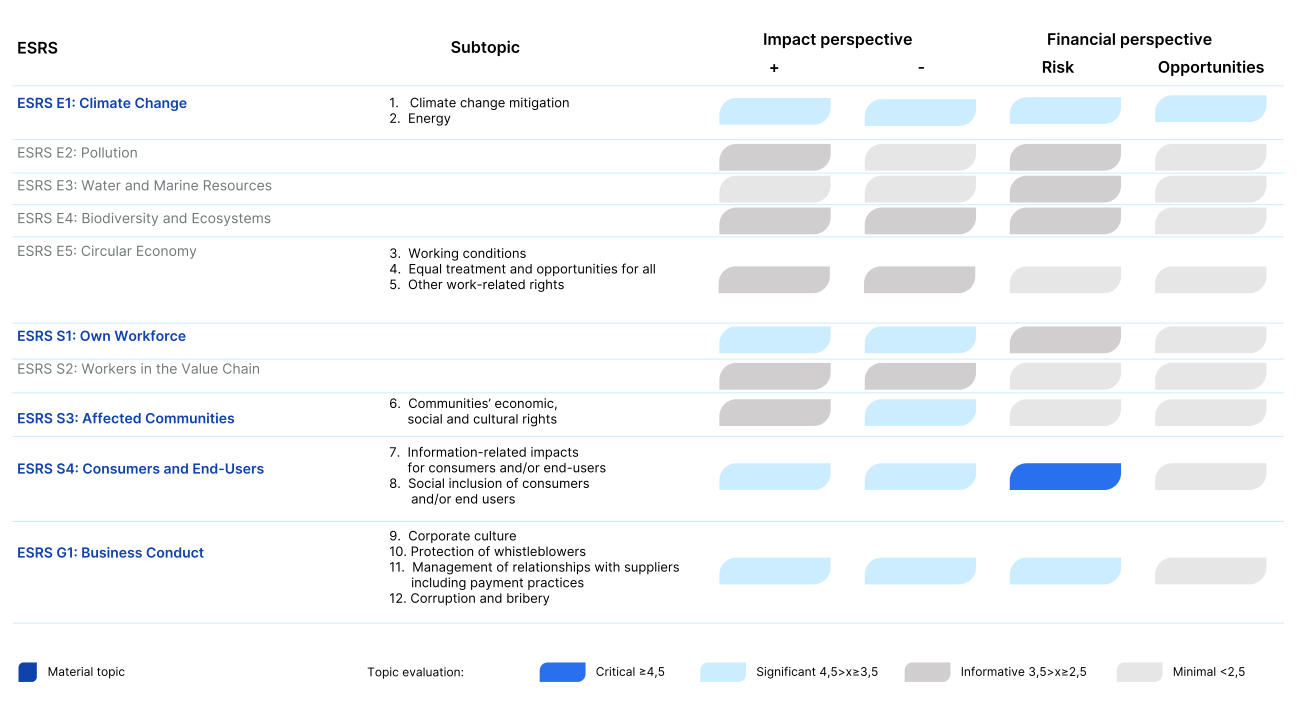
Our materiality matrix serves as the foundation for integrated management of ESG topics, strategic decision-making and the implementation of actions within our business model. This enables us to prioritise actions in a way that best addresses the risks and needs associated with the operations of the Erste Bank Polska Group.

As part of the Double Materiality Assessment (DMA) conducted in 2024,  we identified five themes and twelve sub-themes related to sustainable development that are crucial from our organisation’s perspective

5
themes related to sustainable development
12
sub-themes related to sustainable development
Tematy związane ze zrównoważonym rozwojem ESRS
Tematy związane ze zrównoważonym rozwojem ESRS Podtematy Perspektywa wpływu Perspektywa finansowa
+ Ryzyko Szanse
ESRS E1 Zmiana klimatu 1. Łagodzenie zmiany klimatu
2. Energia

Istotny 4,5>x≥3,5

Istotny 4,5>x≥3,5

Istotny 4,5>x≥3,5

Istotny 4,5>x≥3,5

ESRS E2: Zanieczyszczenia

Informacyjny 3,5>x≥2,5

Minimalny <2,5

Informacyjny 3,5>x≥2,5

Minimalny <2,5

ESRS E3: Woda i zasoby morskie

Minimalny <2,5

Minimalny <2,5

Informacyjny 3,5>x≥2,5

Minimalny <2,5

ESRS E4: Bioróżnorodność i ekosystemy

Informacyjny 3,5>x≥2,5

Informacyjny 3,5>x≥2,5

Informacyjny 3,5>x≥2,5

Minimalny <2,5

ESRS E5: Wykorzystanie zasobów oraz Gospodarka o obiegu zamkniętym 3. Warunki pracy
4. Równe traktowanie i równość szans dla wszystkich
5. Inne prawa związane z pracą

Informacyjny 3,5>x≥2,5

Informacyjny 3,5>x≥2,5

Minimalny <2,5

Minimalny <2,5

ESRS S1: Własne zasoby pracownicze

Istotny 4,5>x≥3,5

Istotny 4,5>x≥3,5

Informacyjny 3,5>x≥2,5

Minimalny <2,5

ESRS S2: Osoby wykonujące pracę w łańcuchu wartości

Informacyjny 3,5>x≥2,5

Informacyjny 3,5>x≥2,5

Minimalny <2,5

Minimalny <2,5

ESRS S3: Dotknięte społeczności 6. Prawa gospodarcze, społeczne i kulturalne społeczności

Informacyjny 3,5>x≥2,5

Istotny 4,5>x≥3,5

Minimalny <2,5

Minimalny <2,5

ESRS S4: Konsumenci i użytkownicy końcowi 7. Oddziaływanie informacji na konsumentów lub użytkowników końcowych
8. Włączenie społeczne konsumentów lub użytkowników końcowych

Istotny 4,5>x≥3,5

Istotny 4,5>x≥3,5

Krytyczny ≥4,5

Minimalny <2,5

ESRS G1: Postępowanie w biznesie 9. Kultura korporacyjna
10. Ochrona sygnalistów
11. Zarządzanie stosunkami z dostawcami
12. Korupcja, przekupstwo

Istotny 4,5>x≥3,5

Istotny 4,5>x≥3,5

Istotny 4,5>x≥3,5

Minimalny <2,5


Our stakeholders

We engage in dialogue with external and internal stakeholders in a systematic and transparent manner, through various communication channels. We want to understand their concerns and needs, set priorities, and identify opportunities and areas for further work and development.

Grupy Interesariuszy Kanały kontaktu i dialogu
Klienci indywidualni obsługa w placówkach bankowych i franczyzowych oraz kanałach zdalnych, strona WWW i inne kanały internetowe (blog Banku, Facebook, LinkedIn, Tik Tok, Instagram), cykliczne badania satysfakcji klientów; badania focusowe, spotkania, konferencje i szkolenia, bezpośrednia rozmowa z doradcą, czat wideo, formularz internetowy, analiza zgłoszeń z systemu reklamacyjnego, analiza zgłoszeń na kanały whistleblowingowe
Klienci biznesowi bezpośredni kontakt z bankierami i doradcami klienta, centra bankowości biznesowej i korporacyjnej, udział w konferencjach wirtualnych misjach handlowych, cykliczne badania opinii i satysfakcji, rozmowy z doradcami online, analiza zgłoszeń z systemu reklamacyjnego, analiza zgłoszeń na kanały whistleblowingowe, zaproszenia do udział w sesjach dialogowych
Pracownicy cykliczne badanie opinii pracowników, bieżąca komunikacja poprzez intranet, biuletyny, newslettery, mailingi, odbywają się cykliczne spotkania z najwyższą kadrą zarządzającą, organizowane są spotkania integracyjne, warsztaty i szkolenia, analizowane są zgłoszenia na kanały whistleblowingowe, współpraca z HR biznes partnerami, stosowne jest narzędzie KOLAB które służy do współtworzenia rozwiązań z pracownikami
Udziałowcy i środowisko inwestorskie kwartalne prezentacje wynikowe (spotkania, konferencje, komunikaty giełdowe i prasowe), Walne Zgromadzenie, zaproszenia do udziału w sesjach dialogowych/ wywiadach pogłębionych
Organy regulacyjne raporty, wymiana formalnej korespondencji, bieżąca współpraca podczas kontroli nadzorczych, zaproszenie do udziału w sesjach dialogowych
Media i opinia publiczna konferencje i briefingi prasowe, wywiady, komentarze ekspertów, spotkania bezpośrednie, komunikaty prasowe, kanały w serwisach społecznościowych
Partnerzy społeczni bezpośrednie spotkania i współpraca, zaproszenie do udziału w sesjach dialogowych z interesariuszami, współpraca Fundacji Santander Bank Polska z innymi organizacjami i społecznościami lokalnymi, udział w konferencjach i lokalnych wydarzeniach, zaangażowanie pracowników w realizację inicjatyw poprzez wolontariat pracowniczy
Grupa Santander raporty bieżąca korespondencja, spotkania i wymiana doświadczeń
Środowisko naturalne raporty ESG, raporty do instytucji, kontakty i współpraca z organizacjami działającymi na rzecz środowiska
Dostawcy i partnerzy biznesowi bieżąca współpraca, bezpośredni kontakt, udział ekspertów Grupy Kapitałowej w konferencjach i wydarzenia branżowych, zaproszenia do udziału w sesjach dialogowych
Organizacje i zrzeszenia branżowe bezpośrednie spotkania i współpraca, udział ekspertów Grupy Kapitałowej w konferencjach i wydarzeniach branżowych, zaproszenia do udziału w sesjach dialogowych, wymiana informacji i doświadczeń w ramach działających grup roboczych

ESG management at our bank

Sustainability topics are discussed by the bank’s Management Board and Supervisory Board, as well as by the relevant committees.

The Management Board and the Supervisory Board play an active role in setting  sustainability-related objectives  by approving the business strategy. The Management Board oversees and approves the implementation of strategic objectives under the “Total Responsibility” framework and is responsible for integrating ESG impacts, risks, opportunities and criteria into the business strategy (in the short-, medium- or long-term) and within the risk management process. The bank’s Supervisory Board oversees the process of developing, implementing and executing the responsible banking programme and ensuring compliance with regulatory requirements relating to ESG.

As part of the assignment of responsibilities among Management Board members, the tasks and duties regarding the ESG agenda are divided as follows:

  • the Vice-President of the Management Board in charge of the Risk Management Division is responsible for managing ESG risks,
  • the Vice-President of the Management Board in charge of the Business and Corporate Banking Division and the Corporate and Investment Banking Division is responsible for matters relating to sustainable finance,
  • the Head of the Communications and Brand Experience Division, who operates outside the divisional structure and reports directly to the President of the Management Board, is responsible for coordinating the Group’s activities related to responsible banking, including qualitative ESG reporting,
  • the Member of the Management Board responsible for the Accounting and Financial Control Division is responsible for matters relating to quantitative ESG reporting.

Committees

The ESG Committee is the main committee responsible for managing sustainability and ESG matters in our bank. It supports the bank’s Management Board in fulfilling its management responsibilities regarding strategic sustainability initiatives. The Committee also sets the direction for strategic activities and establishes and monitors sustainability targets across all areas of the bank’s operations. The Committee is chaired by the President of the Management Board.

The ESG Forum is a working group that coordinates the bank’s ESG activities on an ongoing basis. Its remit includes analysing challenges, opportunities and risks in the areas of responsible banking, sustainable development, corporate culture, sustainable finance, ESG risks and the climate agenda. The Forum regularly reports on its work to the ESG Committee and the bank’s Management Board. The Forum also monitors progress in the implementation of strategic ESG initiatives by subsidiary companies.

ESG factors in remuneration policies

Management Board remuneration:

The ESG component is one of the qualitative factors taken into account when calculating the bonus pool for the Management Board, with a weighting ranging from -5% to +5% of variable remuneration. In the context of climate targets, the assessment takes into account indicators such as the degree of the sustainable finance agenda implementation and progress on the Group’s climate agenda.

The bank also operates a long-term incentive scheme based on the bank’s shares, which includes ESG targets as one of the three key elements of the assessment for the retention bonus. ESG targets account for 20% of the programme’s weighting. This includes, among other things, indicators such as the number of women in management positions and the gender pay gap.

Employee remuneration:

All employees work towards mandatory targets related to the “Total Responsibility” direction, as one of the key pillars of the bank’s strategy. These targets support the implementation of the sustainability strategy across the organisation and have an impact on the bonus pool value.



For more information, see our 2025 Sustainability Statement.

PDF